A kitchen countertop has to do more than look beautiful. It needs to work with your cabinets, backsplash, lighting and flooring while handling everyday cooking, spills, heat, cleaning and entertaining. That is why choosing the right stone countertops kitchen material requires both design judgment and practical planning.
Natural stone offers something manufactured surfaces cannot completely reproduce: every slab has its own mineral structure, movement, colour variation and geological character. Granite, marble, quartzite and soapstone can each create a very different kitchen personality.
For homeowners considering stone countertops kitchen options in Kitchener, the most important decision is not simply choosing the most attractive colour. You need to match the stone’s characteristics with how you actually use your kitchen.
This guide explains how to compare materials, inspect slabs, select finishes and edges, plan fabrication and installation, and avoid common mistakes when designing with natural stone.
Stone countertops kitchen options include natural materials such as granite, marble, quartzite and soapstone. The best choice depends on durability, maintenance, appearance, budget and how the kitchen is used. Homeowners should compare actual slabs, understand the stone’s care requirements and explore custom stone countertop options before making a final selection.
Why Natural Stone Remains a Strong Kitchen Choice
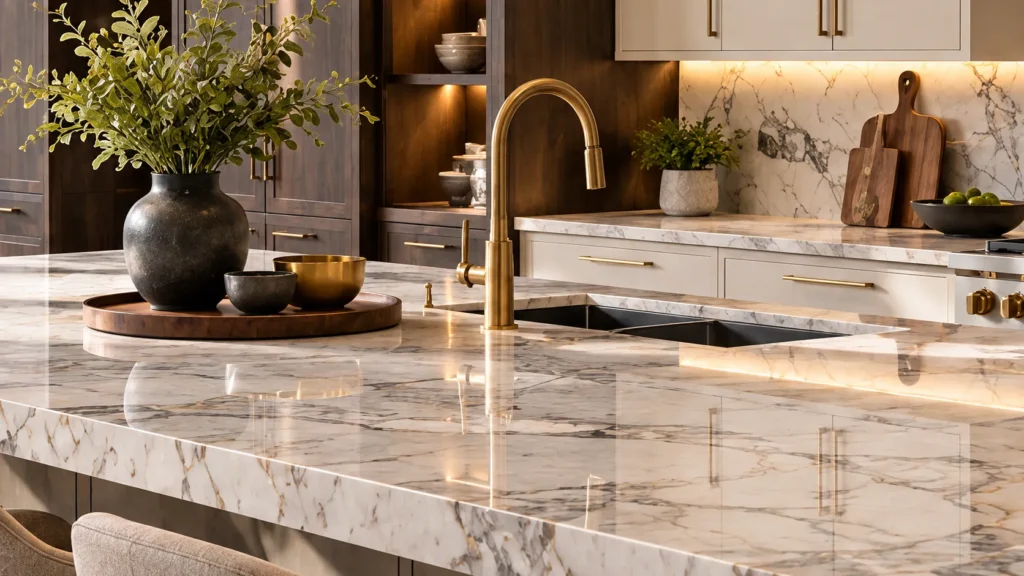
Natural stone has remained popular because it combines visual individuality with practical performance. The Natural Stone Institute notes that natural stone is widely used for countertops and that granite, quartzite, marble and soapstone each have different performance characteristics.
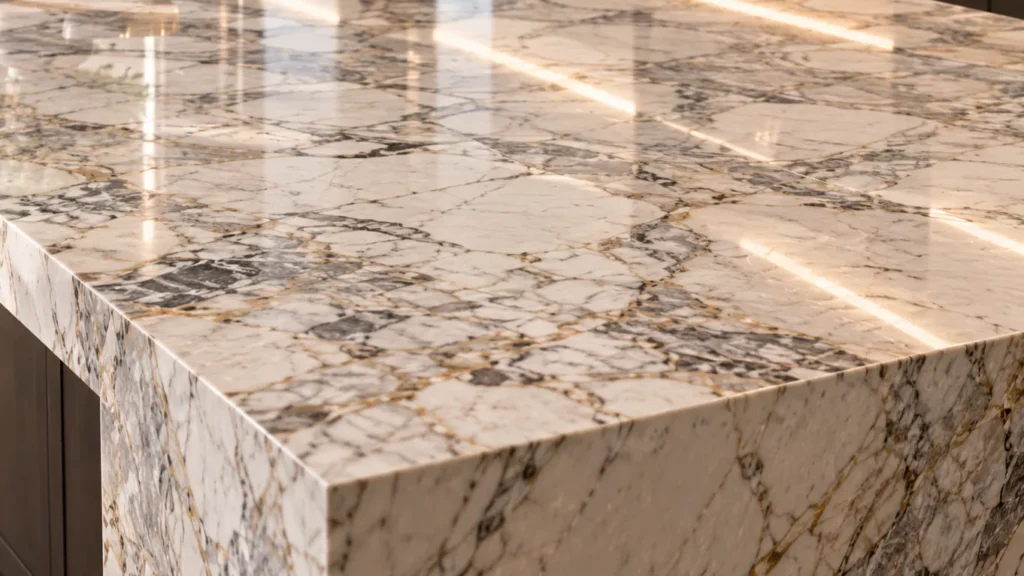
A major advantage is slab individuality. Two slabs of the same named stone can have noticeably different patterns and movements. That matters when your countertop is intended to become a major visual feature.
For stone countertops kitchen projects, natural variation can actually become part of the design rather than something to hide.
Other advantages include:
- Distinctive natural veining and mineral movement
- Multiple colour and pattern options
- Different surface finishes
- Custom edge profiles
- Excellent compatibility with wood, painted and modern cabinetry
- Strong visual continuity between countertops and backsplashes
- Long-term design appeal
The key is selecting a stone according to both aesthetics and performance rather than treating every natural stone as interchangeable. Comparing different countertop materials and styles can help you narrow down the right option for your kitchen.
Choosing the Right Stone for Your Kitchen
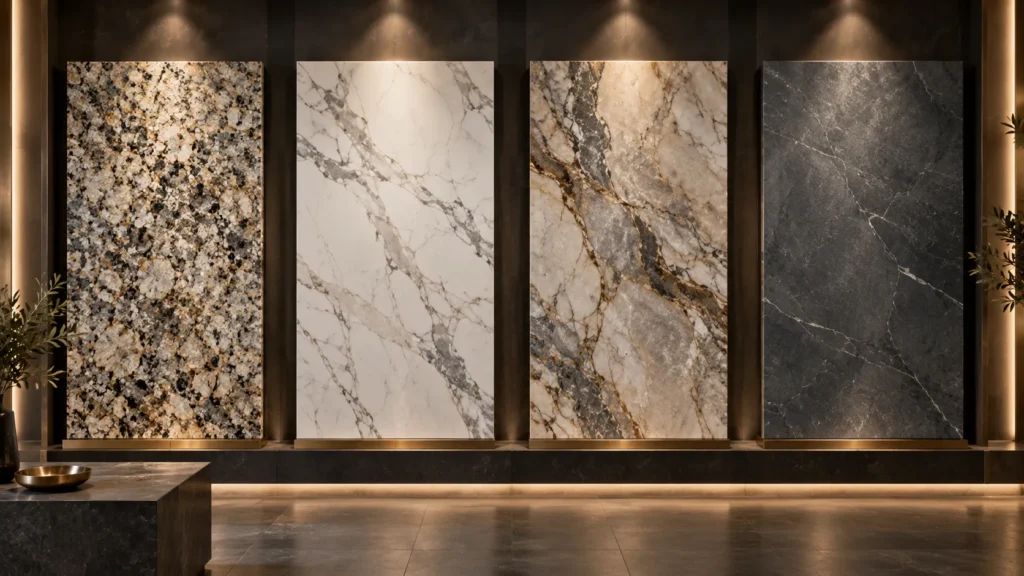
The most common mistake in stone countertops kitchen planning is choosing based entirely on colour.
Instead, start with four questions:
- How heavily will the kitchen be used?
- How much maintenance are you comfortable with?
- Do you prefer subtle or dramatic natural movement?
- What design style are you trying to create?
Granite: Practical and Versatile
Granite countertops are one of the most established choices for stone countertop kitchen installations because they offer strong durability and a broad range of colours and patterns.
It can work particularly well in busy family kitchens where the countertop needs to withstand everyday use.
Granite is generally a strong option if you want:
- Durability
- A broad colour selection
- Distinctive mineral patterns
- Relatively straightforward maintenance
- A timeless appearance
However, granite is not identical from slab to slab. Some varieties are more porous than others, so sealing and maintenance requirements should be discussed for the specific material selected. The Natural Stone Institute recommends following the sealer manufacturer’s instructions rather than applying one universal maintenance schedule.
Marble: Elegant but Less Forgiving
Marble is often selected for its sophisticated veining and classic appearance. It can create an exceptionally refined stone countertop kitchen design, particularly in white, cream and grey palettes.
But marble requires realistic expectations.
Marble can be more susceptible to scratching and acid etching than harder stones. Citrus, vinegar, wine and other acidic substances can affect the surface.
That does not make marble a poor kitchen material. It means marble is best for homeowners who appreciate natural patina and are willing to use appropriate care.
Quartzite: Natural Stone With High Performance
Quartzite is increasingly considered when homeowners want dramatic natural patterns while prioritizing hardness and durability.
However, stone identification matters. Some materials are marketed using quartzite-related names even though their characteristics may differ significantly. The Natural Stone Institute specifically warns consumers about confusion between true quartzite and softer marble or dolomitic materials.
For a stone countertop kitchen project, ask exactly what stone you are buying and request information about its characteristics before approving fabrication.
Soapstone: Warm and Distinctive
Soapstone has a softer, more tactile appearance than many polished stones. It can suit farmhouse, traditional, rustic and contemporary kitchens.
Its softness means scratches can occur, but that is not necessarily a disadvantage. Many homeowners like the lived-in character that develops over time.
Stone Slab Countertops – Why the Actual Slab Matters
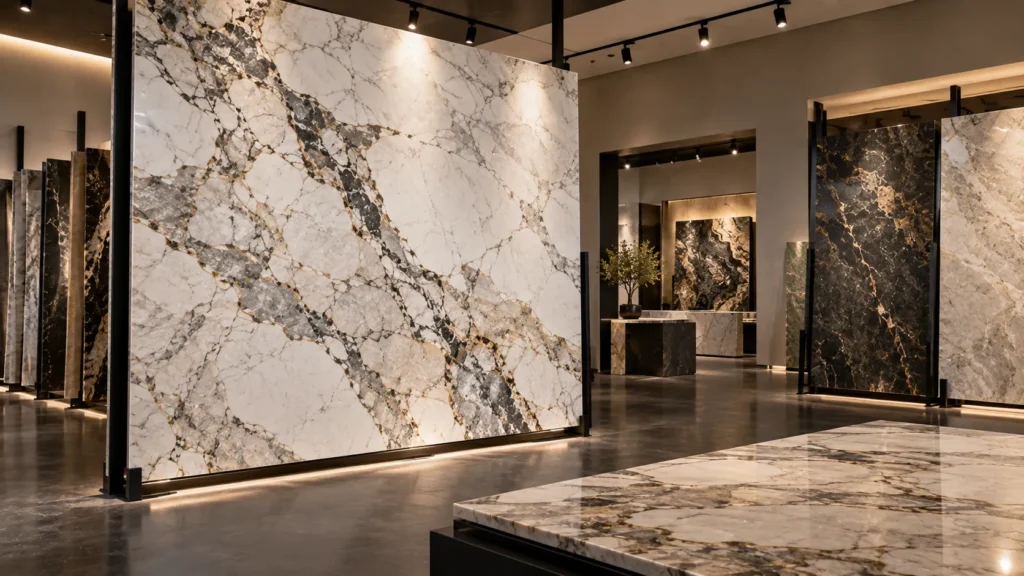
One of the most valuable decisions you can make when selecting stone countertops kitchen materials is to view the actual slab.
A small sample cannot always communicate:
- Vein direction
- Colour variation
- Mineral concentration
- Dramatic movement
- Natural fissures
- Pattern scale
- How the material will look across a large island
The Natural Stone Institute recommends visiting stone yards and viewing actual slabs when selecting natural stone because samples cannot fully represent the variation of a natural material.
A Practical Slab-Selection Process
For your stone countertops kitchen project, bring samples or photos of:
- Cabinet doors
- Flooring
- Backsplash
- Wall paint
- Hardware
- Appliances
Then compare them directly against the slab.
Do not judge the stone only under showroom lighting. If possible, examine it from different angles and ask how the fabricator intends to orient the slab.
For highly veined materials, slab orientation can completely change the visual result.
Stone Kitchen Design – Match the Countertop to the Room
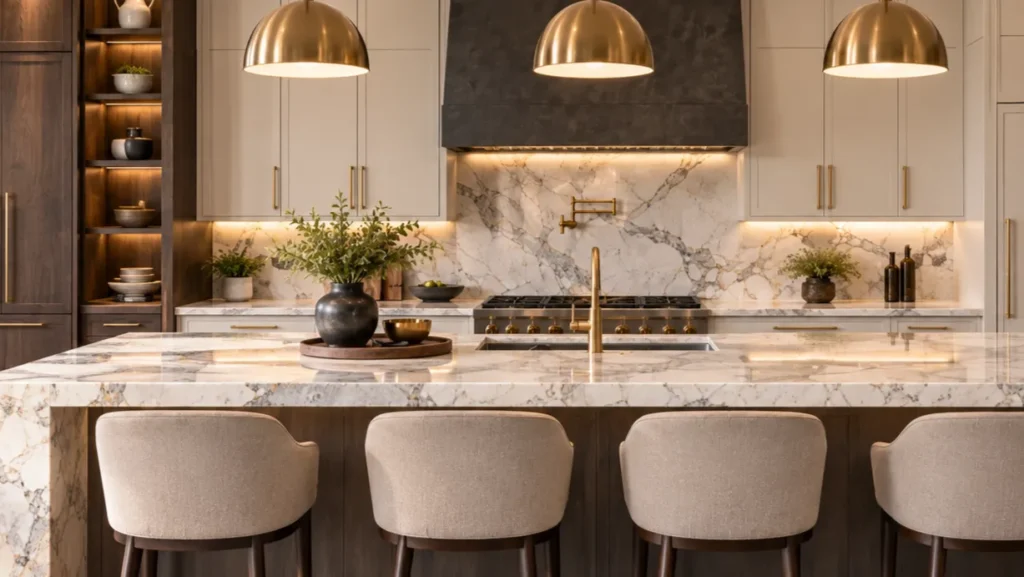
Good stone countertops kitchen design starts with the entire room rather than the countertop alone.
With White Cabinets
White cabinets can support both subtle and dramatic stones.
Consider:
- Soft grey marble
- White quartzite with grey veining
- Dark granite for contrast
- Warm beige or cream stone for a softer atmosphere
With Dark Cabinets
Dark cabinetry often benefits from lighter countertops that prevent the room from feeling visually heavy.
Alternatively, a dark stone can create a sophisticated monochromatic design when paired with carefully controlled lighting.
With Wood Cabinets
Wood and natural stone are naturally complementary. Warm wood can soften dramatic stone, while cool-toned stone can create contrast against oak or walnut.
The goal is balance.
If the slab already contains significant movement, simpler cabinetry and backsplash materials may allow the stone to become the focal point.
Polished, Honed or Leathered – Which Finish Should You Choose?
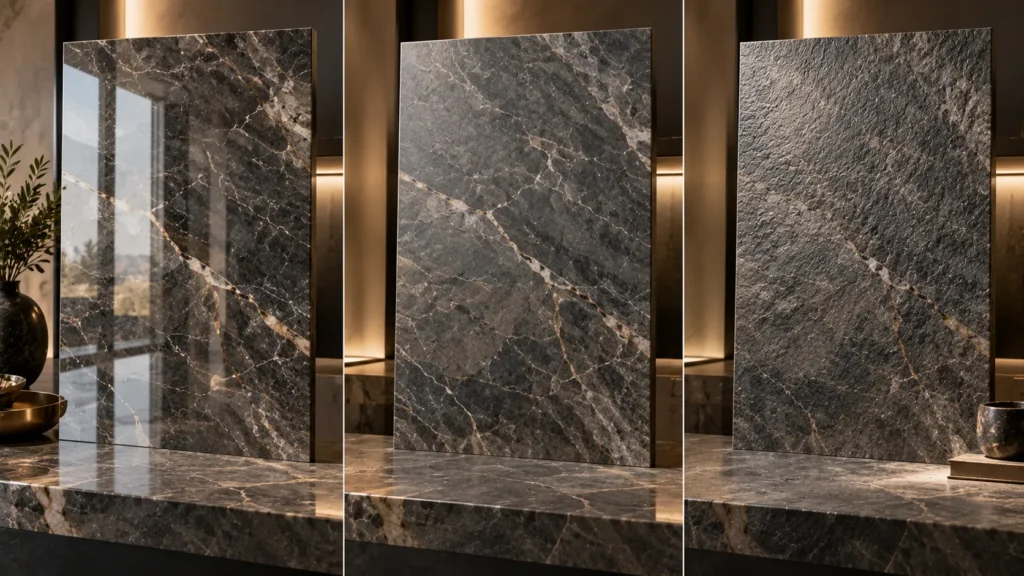
The surface finish changes how stone countertops kitchen materials look and perform visually.
Polished Finish
A polished surface creates a reflective appearance and can emphasize colour and veining.
It works especially well when you want:
- A refined appearance
- Strong visual depth
- Easy visual cleaning
- A more formal kitchen aesthetic
Honed Finish
A honed finish has a softer, matte appearance.
It can be particularly attractive in:
- Modern kitchens
- Farmhouse kitchens
- Transitional interiors
- Designs where you want less reflection
However, a matte finish does not automatically eliminate maintenance considerations. The characteristics of the underlying stone still matter.
Leathered Finish
Leathered finishes introduce tactile texture and can give stone countertops kitchen surfaces a more natural or contemporary character.
Natural Stone Institute resources identify polished, honed, leathered and brushed finishes as options that can significantly influence the look and feel of natural stone.
Countertop Edges – A Small Detail With a Big Visual Effect
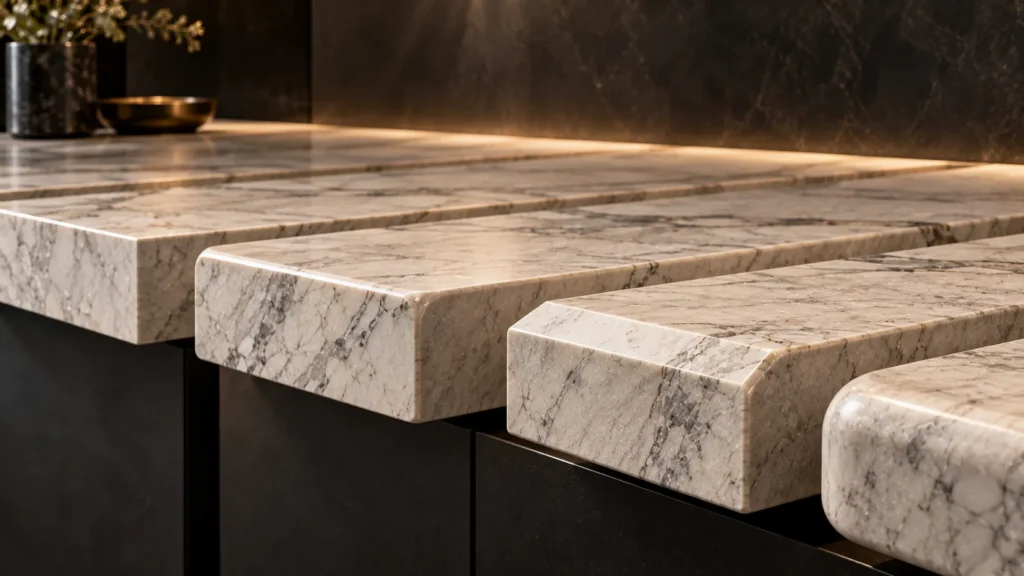
Edge profiles are often overlooked during stone countertops kitchen planning.
Common options include:
- Straight edge
- Eased edge
- Beveled edge
- Bullnose
- Ogee
- Custom profiles
A clean eased or straight edge can complement contemporary kitchens, while more decorative profiles can work with traditional cabinetry.
The right edge should also consider the thickness and visual weight of the slab.
How to Plan a Successful Stone Countertop Installation
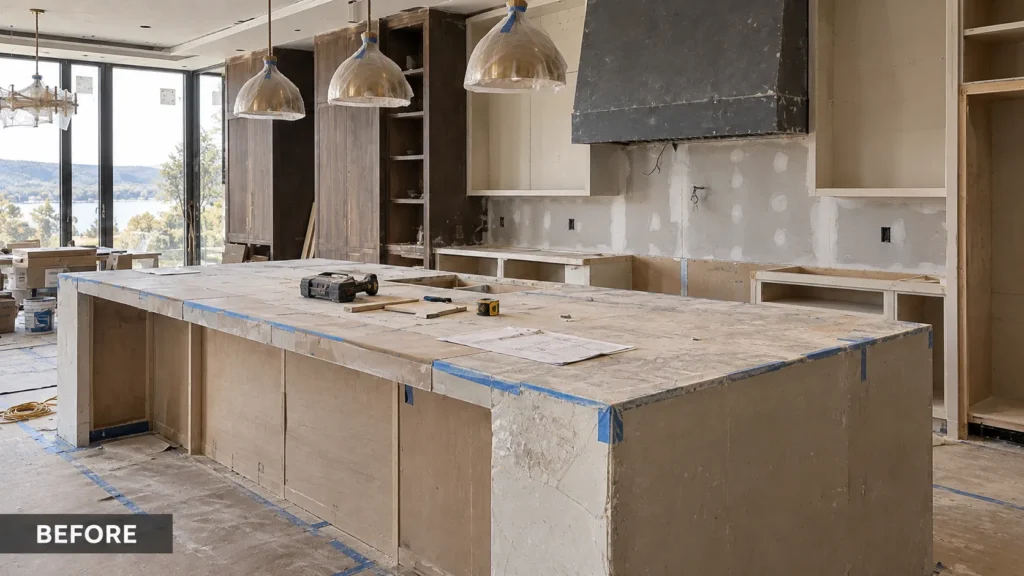
Once the material has been selected, fabrication becomes critical.
A typical installation process includes:
- Confirming the final kitchen layout
- Measuring and templating the countertop
- Confirming sink and cooktop specifications
- Determining slab layout and seam locations
- Cutting and fabricating the stone
- Preparing edges and openings
- Transporting the fabricated pieces
- Installing and securing the countertops
- Completing seams and final adjustments
For stone countertops kitchen installations, accurate templating is especially important because walls are not always perfectly straight and cabinetry can contain small variations. Professional countertop installation also helps ensure the finished surface is properly measured, positioned and secured.
Professional installation also involves handling very heavy slabs safely. Natural Stone Institute guidance notes that homeowners should prepare the installation area and minimize interruptions while professionals are handling stone.
Think About Seams Before Fabrication
Seams are sometimes unavoidable, particularly on large islands or long runs.
A good fabricator considers:
- Slab dimensions
- Vein direction
- Cabinet layout
- Sink location
- Visibility from major viewpoints
- Structural considerations
The goal is not always to eliminate seams. It is to place them where they are least visually distracting.
How to Care for Natural Stone Countertops
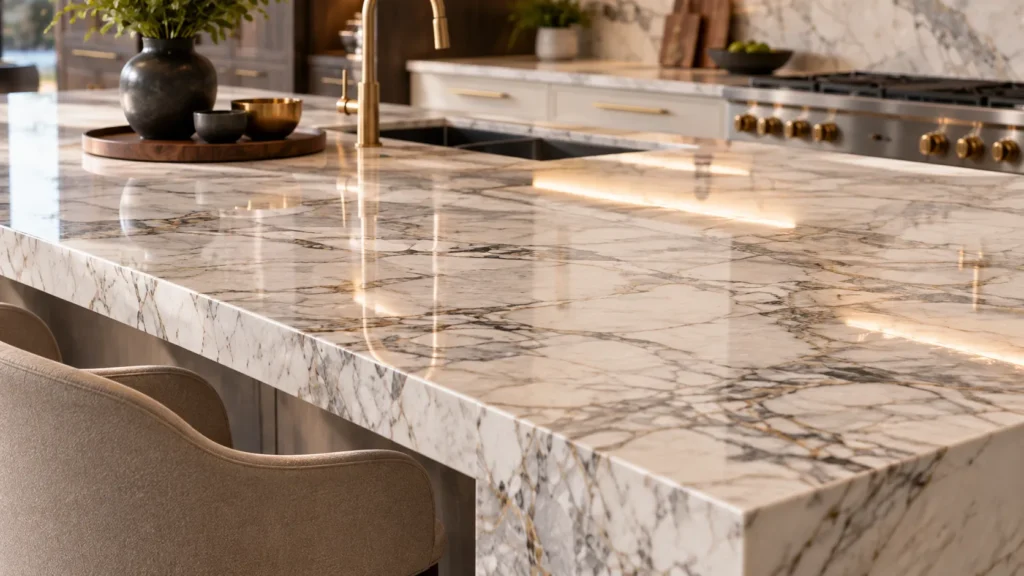
Maintenance for stone countertops kitchen surfaces depends heavily on the specific stone.
A good baseline routine includes:
- Wipe spills promptly
- Use cleaners recommended for the stone
- Avoid harsh chemicals unless specifically approved
- Use cutting boards
- Use trivets for hot cookware
- Keep abrasive debris off the surface
- Follow the stone manufacturer’s sealing recommendations
Granite, for example, generally benefits from appropriate neutral cleaning products and may require sealing depending on the stone and product used.
Marble requires additional awareness because sealing does not make it immune to acid etching.
For stone countertops kitchen surfaces, understanding the material is more useful than following a generic maintenance schedule.
Natural Stone vs. Engineered Quartz
Homeowners comparing stone countertops kitchen options often consider natural stone alongside engineered quartz.
| Factor | Natural Stone | Engineered Quartz |
| Appearance | Naturally unique | Highly controlled designs |
| Slab variation | Usually significant | More consistent |
| Material options | Granite, marble, quartzite, soapstone and more | Engineered composition |
| Maintenance | Depends on stone | Generally straightforward |
| Natural character | Very high | Designed to replicate natural aesthetics |
| Best for | Homeowners who value authentic stone | Homeowners prioritizing consistency |
Neither material is automatically best for every kitchen.
The better choice depends on your priorities, lifestyle, design preferences and maintenance expectations.
Common Mistakes to Avoid
Before approving your stone countertops kitchen project, watch for these mistakes.
1. Choosing From a Tiny Sample
A sample may not show the full movement of a slab.
2. Ignoring Maintenance
A beautiful stone that does not suit your lifestyle can become frustrating.
3. Selecting the Stone Before Cabinetry
The countertop should work with the whole material palette.
4. Forgetting Slab Layout
A dramatic vein may look excellent in one orientation and awkward in another.
5. Treating All Natural Stone the Same
Granite, marble, quartzite and soapstone have different characteristics.
6. Focusing Only on Price
The cheapest material is not necessarily the best value if it compromises the design or performance you need.
7. Not Discussing Seams
Ask where seams will occur before fabrication begins.
A Smarter Stone Countertop Buying Checklist
Use this checklist before choosing stone countertops kitchen materials:
- Confirm the stone type
- View the actual slab
- Check slab dimensions
- Review colour and movement
- Compare the stone with cabinet samples
- Consider backsplash compatibility
- Ask about porosity
- Ask about sealing requirements
- Choose the surface finish
- Select an edge profile
- Discuss sink and cooktop cutouts
- Plan slab orientation
- Discuss seams
- Confirm fabrication details
- Understand installation requirements
- Get stone-specific care instructions
For homeowners planning stone countertops kitchen projects in Kitchener, reviewing these details before fabrication can prevent expensive design changes later.
Why Local Expertise Matters in Kitchener
Local conditions, home layouts and renovation requirements can influence countertop planning. For homeowners in Kitchener and the surrounding Waterloo Region, working with a local stone professional can make the process easier because measurements, slab selection, fabrication and installation can be coordinated around the actual project.
Cava Granite serves homeowners looking for quality natural stone and countertop solutions at 1358 Victoria St N, Kitchener, ON N2B 3E2.
If you are comparing stone countertops kitchen options, the most useful next step is not necessarily choosing a colour online. It is discussing your kitchen layout, preferred style, performance expectations and available slab options with a stone professional.
Explore Cava Granite’s countertop and stone solutions and use your project requirements to narrow the selection.
Frequently Asked Questions
What are the best stone countertops for a kitchen?
The best stone countertops kitchen material depends on how you use the space. Granite and quartzite are strong choices for homeowners prioritizing durability, while marble may appeal to those who value distinctive veining and are comfortable with greater care.
Is natural stone good for kitchen countertops?
Yes. Natural stone can be an excellent kitchen countertop material when the specific stone is matched to the homeowner’s lifestyle, maintenance expectations and design requirements.
Which is better for a kitchen, granite or marble?
Granite is generally the more practical choice for homeowners prioritizing durability and easier everyday use. Marble offers distinctive veining and elegance but is more susceptible to scratching and acid etching.
Should I see the actual stone slab before buying?
Yes. Viewing the actual slab is strongly recommended because natural stone can have significant variations in colour, veining and movement that small samples cannot show.
Do natural stone countertops need to be sealed?
Some natural stones benefit from sealing, but requirements vary by material and product. Follow the fabricator’s and sealer manufacturer’s recommendations rather than assuming every stone requires the same schedule.
Can natural stone work in a modern kitchen?
Absolutely. Clean cabinet lines, minimalist hardware, large-format slabs and simple edge profiles can make natural stone work beautifully in contemporary kitchen designs.
Choose the Stone That Fits Your Kitchen
The best stone countertops kitchen decision is not about finding the universally “best” stone. It is about finding the right combination of appearance, performance, maintenance, fabrication requirements and budget for your specific kitchen.
Granite can provide dependable everyday performance. Marble can introduce timeless veining and character. Quartzite can combine dramatic natural beauty with strong durability. Soapstone can create a softer, distinctive atmosphere.
The most important step is to evaluate the actual slab and understand how the material will behave before fabrication begins.
For homeowners planning a kitchen renovation in Kitchener, Cava Granite can help you move from inspiration to a practical countertop selection.
Ready to explore your options? Contact Cava Granite or visit the Kitchener location at 1358 Victoria St N to discuss your project and find a stone solution that fits both your kitchen and your lifestyle.