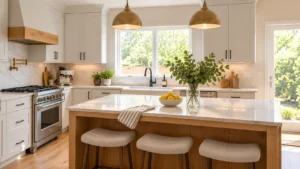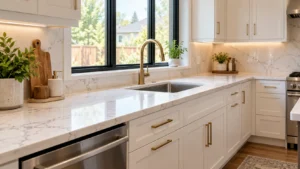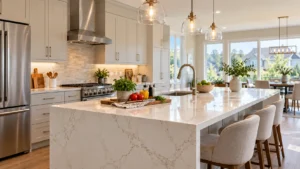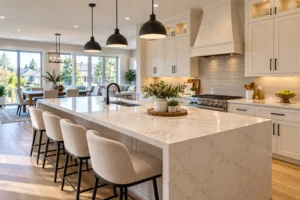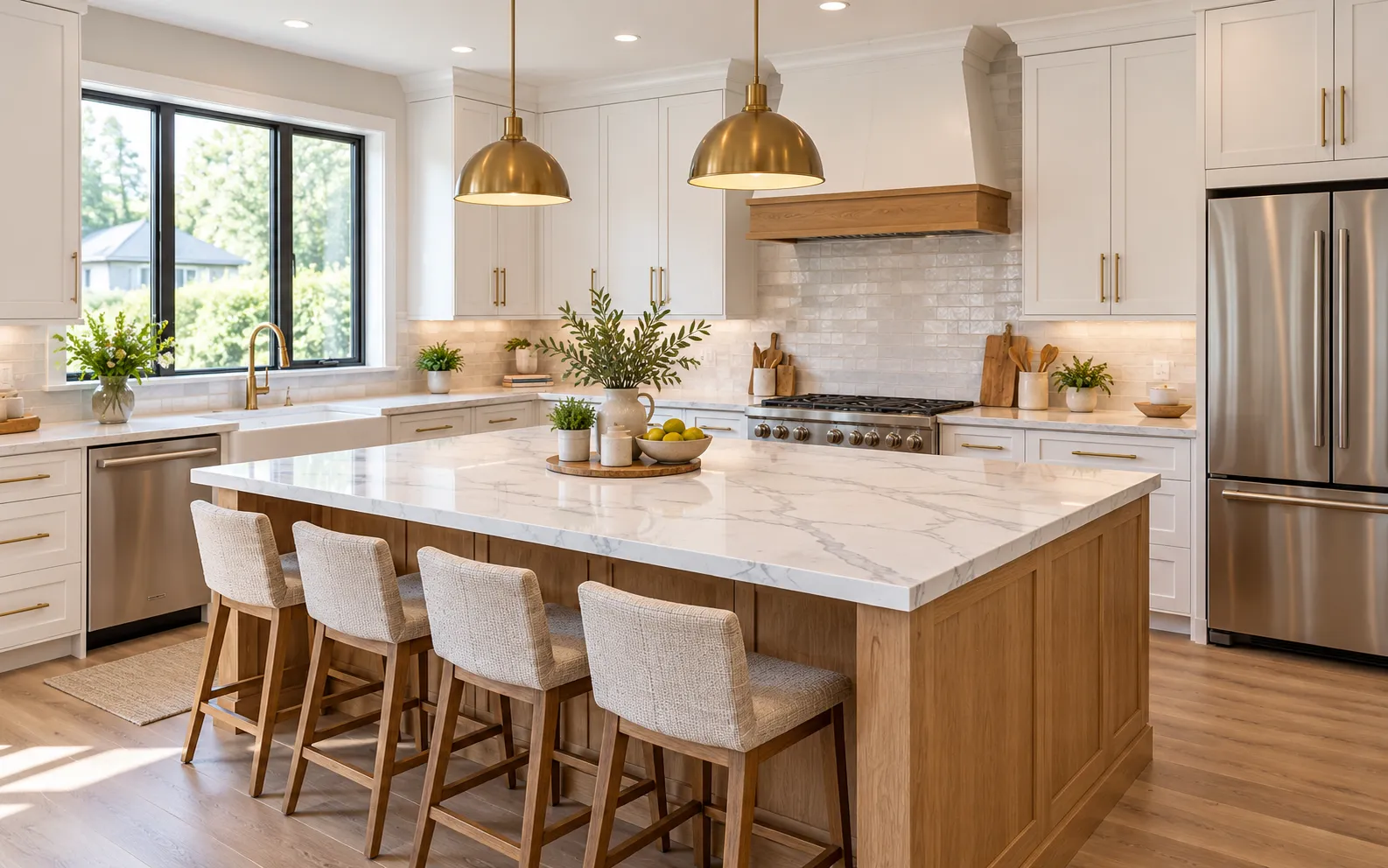
Choosing the right countertop color can completely transform your kitchen. It influences how spacious the room feels, how your cabinets look, how light moves across the space, and whether your design feels timeless or trend-driven. That is why exploring the popular quartz countertop colors is an important first step when planning a kitchen renovation.
Quartz countertops are available in a wide range of colors, patterns, and finishes, from crisp white and warm beige to sophisticated greige, dramatic black, and marble-inspired designs with flowing veins. This variety makes it easier to find a surface that complements your kitchen style without sacrificing everyday practicality.
For homeowners in Kitchener, Ontario, selecting quartz involves more than choosing a color that looks attractive in a showroom. You also need to consider natural light, cabinet finishes, flooring, backsplash materials, kitchen size, and how you use the space.
At Cava Granite, homeowners can explore quartz countertop options for kitchens, bathrooms, and other interior spaces. For other home design projects, you can also explore Cava GraniBest Quartz Countertop Colote’s fireplace options. This guide explains the most popular quartz countertop colors, how to coordinate them with your kitchen, and what to consider before choosing a slab.
What Are the Most Popular Quartz Countertop Colors in 2026?
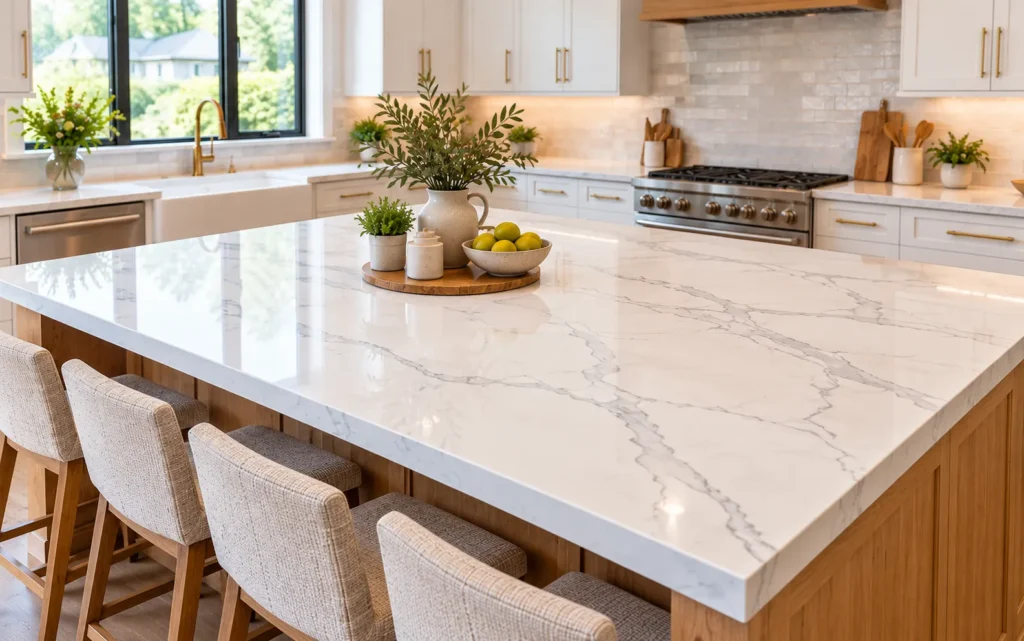
The most popular quartz countertop colors include white, off-white, marble-look white, gray, greige, beige, black, brown, and selected statement shades such as green or blue. Warm neutrals and marble-inspired patterns remain versatile choices for many contemporary and traditional kitchens.
However, popularity alone should not determine your selection. The best color is one that works with your existing finishes, lighting conditions, maintenance preferences, and long-term design goals.
Here is a quick comparison of the leading options.
| Quartz Color | Appearance | Best For | Overall Style |
| Pure white | Clean and bright | Small kitchens, white cabinetry | Minimalist |
| Warm white | Soft white with creamy undertones | Wood cabinets, warm interiors | Welcoming |
| Calacatta-inspired white | White background with bold veining | Islands and statement kitchens | Luxury |
| Carrara-inspired gray-white | White or light gray with subtle veins | Traditional and modern kitchens | Classic |
| Light gray | Soft, cool neutral | White cabinets and modern finishes | Contemporary |
| Greige | Blend of gray and beige | Wood, cream, and neutral cabinetry | Transitional |
| Beige and cream | Warm, natural-looking tones | Natural wood and earthy palettes | Timeless |
| Black | Deep, dramatic surface | Light cabinets and contrasting designs | Sophisticated |
| Brown and taupe | Earthy, grounded shades | Wood cabinetry and warm interiors | Organic |
| Green or blue | Distinctive color with varying patterns | Accent islands and custom designs | Expressive |
These categories describe broad design directions rather than a verified sales ranking. Exact popularity and availability vary by manufacturer, collection, and local supplier. If you are exploring specific quartz options, discover Mars Quartz as another option to consider for your countertop project.
1. Pure White Quartz Countertops
Pure white quartz is one of the most versatile choices for homeowners who want a clean, bright kitchen. Its simple appearance works particularly well in minimalist interiors, contemporary homes, and spaces where visual simplicity is a priority.
Unlike heavily patterned surfaces, solid-looking white quartz allows cabinets, lighting fixtures, and decorative details to remain the main design features.
Why Choose Pure White Quartz?
White countertops reflect available light and can help a kitchen feel more open. They also provide a neutral foundation for changing backsplash designs, cabinet hardware, and accessories in the future.
Pure white quartz is especially suitable for:
- Small kitchens that need a visually lighter appearance.
- White or light-gray cabinetry.
- Modern kitchens with simple cabinet doors.
- Homeowners who prefer a clean, understated aesthetic.
- Interiors where decorative elements provide most of the visual interest.
What Cabinets Work Best With White Quartz?
White-on-white kitchens create a seamless, spacious appearance. For more contrast, pair white quartz with navy blue, forest green, charcoal, or natural wood cabinets.
A white countertop with dark lower cabinets can also help balance a two-tone kitchen.
What Should You Consider?
Not every white quartz surface looks the same. Some have cool blue-gray undertones, while others lean toward cream or ivory. Under different lighting conditions, these undertones can become more noticeable.
Before committing, compare a sample against your cabinet finish, flooring, and backsplash in the actual kitchen.
2. Warm White Quartz With Subtle Veining
Warm white quartz offers a softer alternative to stark white. It often features ivory or creamy undertones, sometimes complemented by delicate gray, beige, or gold-colored veins.
This color direction works particularly well for homeowners who want a bright kitchen without creating a cold or overly clinical appearance.
Why Is Warm White Quartz a Versatile Choice?
Warm white surfaces complement natural materials and help create a comfortable atmosphere. They are especially effective in kitchens featuring oak cabinets, cream-colored cabinetry, brushed brass hardware, or warm neutral flooring.
Subtle veining adds visual interest without overwhelming the design.
Best Design Combinations
Consider pairing warm white quartz with:
- Natural oak or walnut cabinets.
- Cream or off-white cabinetry.
- Beige porcelain floor tiles.
- Warm metallic cabinet handles.
- A backsplash with understated texture.
For a cohesive result, repeat similar undertones throughout the kitchen rather than combining several competing shades of white and beige.
Who Should Choose Warm White Quartz?
Warm white is a strong option for homeowners planning a timeless renovation. It suits both traditional and contemporary interiors and can adapt to different decorative styles over time.
3. Calacatta-Inspired Quartz Countertops
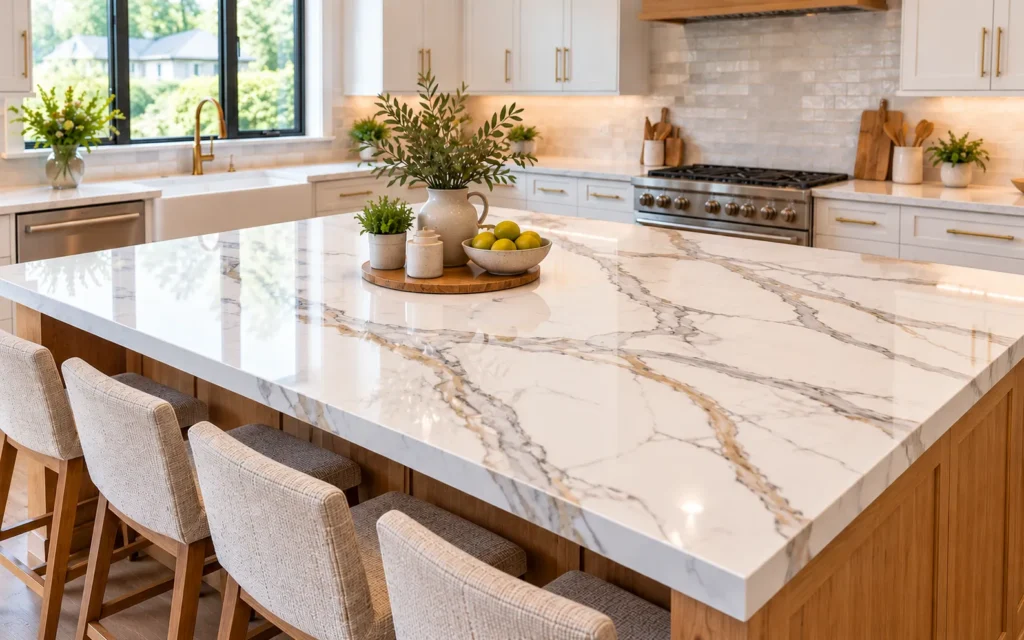
Calacatta-inspired quartz is a popular choice for homeowners seeking a luxurious, marble-like appearance. These surfaces typically feature a white or warm-white background with more pronounced gray, charcoal, or gold-toned veining.
The pattern creates a natural focal point, making it particularly effective on large islands and expansive countertop runs.
What Makes Calacatta-Inspired Quartz Special?
The appeal comes from the contrast between the light background and expressive veins. Depending on the design, the pattern may be delicate and understated or bold enough to become the defining feature of the kitchen.
Engineered quartz can reproduce marble-inspired aesthetics while offering a nonporous surface that generally does not require sealing. Actual performance depends on the specific product and manufacturer.
How to Style Calacatta-Inspired Quartz
For a sophisticated kitchen, combine this style with simple cabinetry and carefully selected finishes.
Recommended combinations include:
- White cabinets for a bright, coordinated design.
- Dark walnut cabinets for warmth and contrast.
- Matte black hardware for a contemporary look.
- Brushed brass accents for added warmth.
- A matching or complementary backsplash that does not compete with the countertop.
Is Bold Veining Right for Your Kitchen Island?
A large island provides more space for dramatic veining to develop across the surface. However, the final result depends on the slab dimensions, fabrication plan, and how the pattern falls around the sink, cooktop, and edges.
Ask your fabricator to show you the actual slab or a representative full-size image before approving the layout. A small sample may not reveal the full visual effect.
4. Carrara-Inspired Quartz Countertops
Carrara-inspired quartz offers a softer, more understated marble look than many bold Calacatta-style designs. It typically features a white or pale gray background with fine gray veins.
This makes it an attractive option for homeowners who appreciate traditional stone aesthetics but prefer a quieter pattern.
What Is the Difference Between Carrara-Inspired and Calacatta-Inspired Quartz?
Although the names are commonly used to describe different marble-inspired looks, actual patterns vary by manufacturer.
Carrara-inspired designs often feature delicate, relatively subtle veining. Calacatta-inspired designs frequently emphasize stronger contrast and more prominent veins.
These are general design conventions, not strict rules for every quartz collection.
Best Uses for Carrara-Inspired Quartz
This style works well in:
- Traditional kitchens with Shaker cabinets.
- Contemporary kitchens with flat-panel cabinetry.
- White and light-gray color schemes.
- Kitchens with understated subway-tile backsplashes.
- Bathroom vanities that coordinate with the kitchen’s overall design language.
If you want a countertop that adds texture without dominating the room, Carrara-inspired quartz is worth considering.
5. Light Gray Quartz Countertops
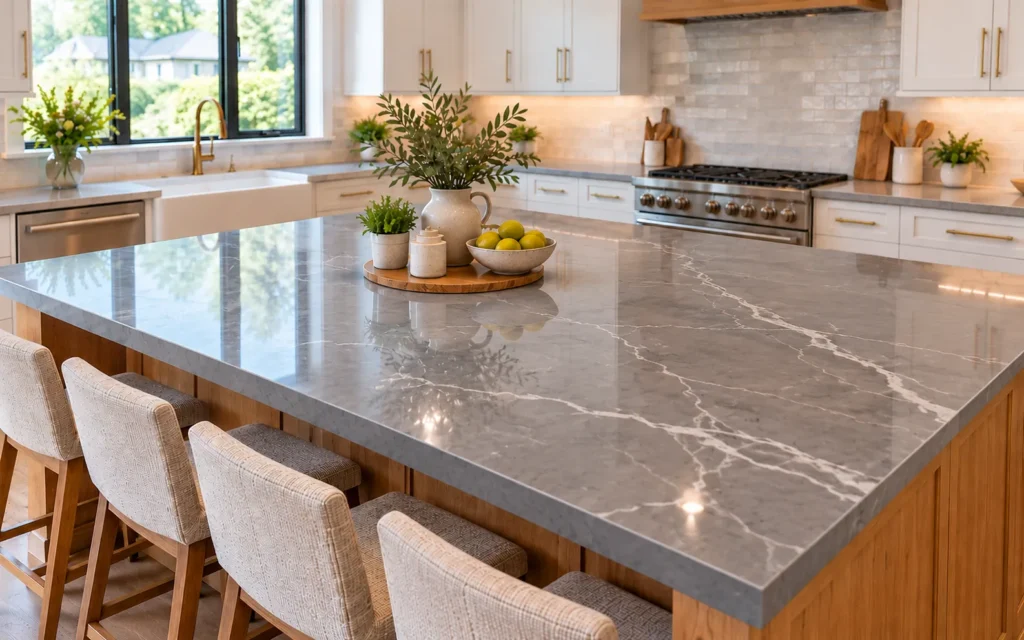
Light gray quartz is a practical design choice for homeowners who prefer a neutral color with a slightly cooler appearance than beige or cream.
Depending on the pattern, gray quartz can resemble concrete, natural stone, or a lightly textured mineral surface.
Why Choose Light Gray Quartz?
Gray provides a middle ground between bright white and darker countertop colors. It can introduce contrast into a white kitchen without creating the stronger visual impact of black.
Light gray is particularly suitable for contemporary interiors with stainless steel appliances, simple cabinet profiles, and restrained decorative details.
Which Cabinets Complement Gray Quartz?
Light gray quartz works well with:
- White cabinets for a crisp, modern look.
- Charcoal cabinets for a layered monochromatic design.
- Natural wood for a balance of cool and warm tones.
- Navy blue cabinets for a refined contrast.
- Black hardware and stainless steel appliances.
Should You Choose Warm or Cool Gray?
This depends on the other materials in the room.
Cool gray may complement blue-toned cabinets and modern metal finishes. Warm gray, sometimes described as greige, is often easier to coordinate with wood, cream, and beige.
If your flooring and cabinets already have warm undertones, a strongly blue-gray countertop may feel disconnected from the rest of the kitchen.
6. Greige Quartz Countertops
Greige combines gray and beige to create a balanced neutral that can work across a wide range of interior styles.
For homeowners who find pure gray too cool and beige too traditional, greige offers an appealing middle ground.
Why Is Greige Worth Considering?
Greige quartz can coordinate with both warm and cool materials, depending on its specific undertones. It is particularly effective in transitional kitchens that combine traditional cabinetry with contemporary lighting and hardware.
Its understated appearance also makes it suitable for homeowners who want a distinctive neutral without choosing a highly patterned countertop.
Best Cabinet Pairings for Greige Quartz
Consider these combinations:
- Greige quartz with white cabinets for a soft, layered palette.
- Greige quartz with oak cabinets for an organic appearance.
- Greige quartz with dark brown cabinetry for warmth and depth.
- Greige quartz with matte black fixtures for contemporary contrast.
How to Avoid a Flat-Looking Kitchen
When several surfaces share similar colors, differences in texture become important.
Combine greige quartz with wood grain, textured backsplash tiles, contrasting cabinet hardware, or a different cabinet shade. These elements create depth without introducing too many competing colors.
7. Beige and Cream Quartz Countertops
Beige and cream quartz are excellent choices for homeowners who prefer warm, inviting interiors. These colors work particularly well in kitchens featuring natural wood, earthy finishes, and soft neutral palettes.
Unlike bright white, beige and cream can create a more relaxed appearance while maintaining the versatility of a neutral countertop.
What Makes Beige Quartz Appealing?
Beige quartz can coordinate with a variety of materials, including oak, walnut, warm-gray cabinets, cream-colored backsplashes, and natural-looking flooring.
Some designs have a relatively uniform appearance, while others feature subtle speckles, mineral-inspired patterns, or marble-like veins.
Best Uses for Beige and Cream Quartz
These colors are worth considering if you want:
- A warm alternative to white countertops.
- A cohesive look with wood cabinetry.
- A traditional or transitional kitchen.
- A soft, neutral palette that avoids strong contrasts.
- A countertop that complements warm flooring and wall colors.
What Should You Check Before Choosing?
Beige can look noticeably different under cool LED lighting compared with warm lighting. Some shades may appear yellow, pink, or gray depending on the surrounding finishes.
Compare your countertop sample with the actual cabinet door and flooring sample before finalizing the color.
8. Black Quartz Countertops
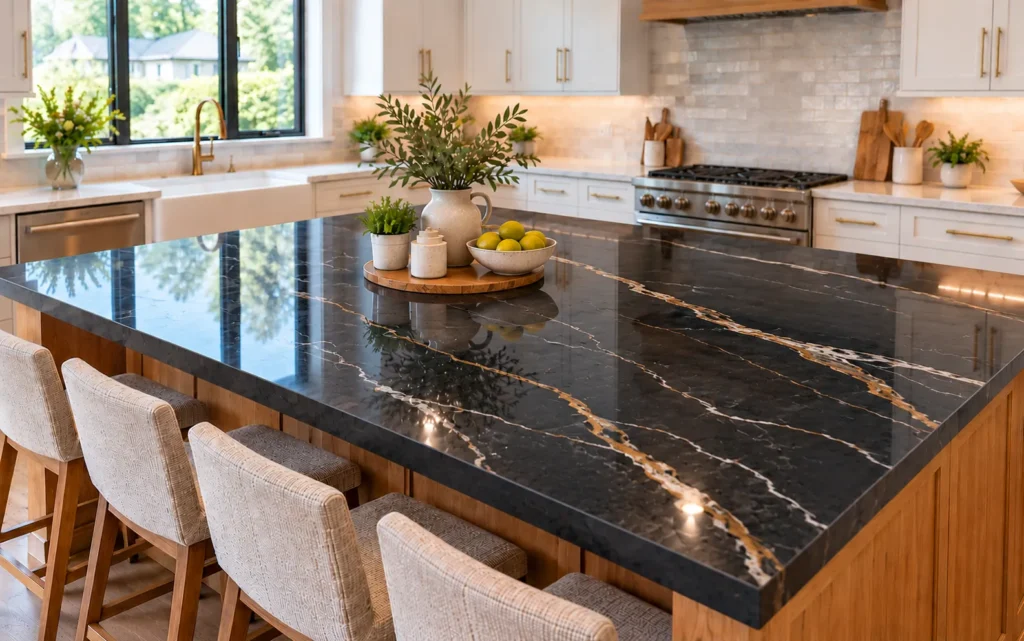
Black quartz creates a dramatic, sophisticated appearance. Depending on the design, the surface may be solid black, lightly speckled, or marked with subtle white and gray patterns.
It is particularly effective when the countertop is intended to create contrast rather than blend into the cabinetry.
Why Choose Black Quartz?
Black countertops can anchor a bright kitchen and make lighter cabinets stand out. They also work well in contemporary interiors that feature strong geometric lines, dark fixtures, and contrasting materials.
A black quartz island can become a focal point even when the perimeter countertops are white or light gray.
Best Combinations for Black Quartz
Popular design pairings include:
- White cabinets with black quartz for a high-contrast kitchen.
- Natural oak cabinets for a modern organic look.
- Dark cabinets with contrasting metallic hardware.
- White or gray veined quartz on the perimeter and black quartz on the island.
- Light backsplash materials that prevent the kitchen from feeling visually heavy.
Is Black Quartz Easy to Maintain?
Quartz is generally low-maintenance, but black surfaces can make certain marks more visible. Water spots, dried residue, fingerprints, and light-colored dust may stand out depending on the finish and lighting.
Regular cleaning with a suitable non-abrasive cleaner helps maintain the appearance. Always follow the manufacturer’s care instructions.
If you want a dark countertop but are concerned about visible marks, compare several black and charcoal samples rather than assuming every dark surface performs the same way.
9. Brown and Taupe Quartz Countertops
Brown and taupe quartz offer an earthy alternative to the more familiar white and gray palettes.
These colors can range from pale mushroom tones to rich chocolate shades, often with patterns inspired by natural minerals or stone.
Why Consider Earthy Quartz Colors?
Earthy countertops complement natural materials and can make a kitchen feel grounded and cohesive. They are particularly effective in interiors where wood cabinetry, textured surfaces, and warm lighting are central design features.
Taupe can also bridge the gap between beige and gray, making it useful in kitchens with mixed warm and cool finishes.
How to Coordinate Brown or Taupe Quartz
For a balanced result, pair lighter taupe surfaces with darker wood cabinets or deeper brown countertops with lighter cabinetry.
Avoid matching every surface to exactly the same shade. A small difference in tone, texture, or finish can help distinguish the countertop from the cabinets and flooring.
These colors are particularly worth exploring if you want an alternative to white marble-inspired quartz while maintaining a neutral, adaptable kitchen design.
10. Green and Blue Quartz Countertops
Green and blue quartz offer a more expressive approach to countertop design. Depending on the collection, these colors may appear as subtle mineral-inspired shades, solid-looking surfaces, or distinctive patterns.
They are less universally neutral than white, beige, and gray, but they can create a memorable kitchen when used thoughtfully.
Green Quartz for a Natural-Inspired Kitchen
Muted green tones can complement natural wood, cream cabinets, warm metallic hardware, and earthy backsplash materials.
A green quartz island can also introduce color without requiring every cabinet or wall in the kitchen to change.
Blue Quartz for a Distinctive Look
Blue quartz can create a fresh contrast with white cabinetry or complement darker navy cabinets for a coordinated design.
Paler blues may suit light, contemporary interiors, while deeper blue tones can create a more dramatic statement.
Should You Use a Statement Color Everywhere?
That depends on your overall design goals. If the countertop has a distinctive color or strong pattern, using it on a kitchen island while keeping the perimeter surfaces more restrained can create a balanced result.
Before purchasing, consider whether the color works with your permanent finishes and whether you are comfortable making it a central feature of the room.
How to Choose the Best Quartz Countertop Color for Your Kitchen
Understanding the popular quartz countertop colors is only the first step. The next task is choosing a surface that works with the actual conditions in your kitchen.
A color that looks beautiful in a showroom may appear different when installed beside your cabinets, flooring, backsplash, and windows.
Use the following factors to narrow your choices.
1. Match the Countertop to Your Cabinet Color
Cabinets occupy a large visual area, so their color should be one of the first considerations when choosing quartz.
| Cabinet Color | Quartz Colors to Consider | Design Effect |
| White | White, gray, greige, black | Bright, versatile, or high-contrast |
| Natural oak | Warm white, beige, greige, taupe | Warm and organic |
| Walnut | Cream, warm white, light gray | Rich contrast |
| Charcoal | White, pale gray, soft beige | Balanced and sophisticated |
| Navy blue | White, gray-white, warm neutral | Refined contrast |
| Forest green | Cream, warm white, subtle-veined quartz | Natural and elegant |
| Black | White, light gray, beige | Strong visual separation |
These combinations are starting points rather than fixed rules. The exact undertones of the cabinet and countertop will determine how well they work together.
2. Consider Your Kitchen’s Natural Light
Lighting can change how quartz appears throughout the day.
A kitchen with large windows may support a wider range of colors because natural light helps reveal subtle patterns. A kitchen with limited daylight may benefit from a lighter surface, although artificial lighting and cabinet colors also influence the final result.
If your kitchen receives cooler northern daylight or has shaded windows, test samples under those conditions rather than relying only on showroom lighting.
For the most accurate comparison, inspect samples during the day and under the artificial lighting you use in the evening. You can also explore the Cava Granite project gallery for visual inspiration when planning your countertop design.
3. Think About the Size and Layout of Your Kitchen
Lighter countertops can help a compact kitchen feel more open, especially when combined with light cabinetry and a visually simple backsplash.
Darker countertops can create useful contrast in a bright room or define a kitchen island as a separate design feature.
However, there is no strict rule that small kitchens must use white quartz. A well-lit small kitchen can look excellent with darker surfaces when the overall design is balanced.
Consider the full room, including cabinet height, window placement, backsplash coverage, and the amount of visible countertop.
4. Choose the Right Veining Pattern
The pattern can be just as important as the base color.
Fine, subtle veining creates a quieter appearance, while large, dramatic veins attract attention and can make the countertop a focal point.
When evaluating veined quartz, consider:
- The scale of the veins relative to the countertop.
- Whether the pattern complements the cabinet door style.
- How the veins will appear across a large island.
- Where seams, sink cutouts, and cooktop openings will fall.
- Whether a matching backsplash would create too much visual activity.
A small sample can help you assess color, but it cannot always show how a large slab will look across the entire kitchen.
5. Coordinate the Countertop With Your Backsplash
Your backsplash and countertop should work together rather than compete for attention.
If your quartz has bold veining, a simpler backsplash often creates a cleaner result. If the countertop is relatively uniform, you have more flexibility to introduce texture or a decorative tile pattern.
You can choose a backsplash that closely matches the countertop, complements its undertones, or creates a deliberate contrast.
Before installation, confirm how the backsplash height, outlets, seams, and edge details will affect the finished appearance.
6. Compare Polished and Textured Finishes
The finish changes the way a quartz color looks and feels.
A polished finish reflects more light and typically creates a smooth, glossy appearance. Honed or other textured finishes can offer a softer visual effect, depending on the specific product.
Finishes may also differ in how they reveal fingerprints, smudges, and surface marks. Follow the manufacturer’s cleaning guidance, especially for non-polished options.
Compare the finish under your actual lighting conditions rather than choosing based on color alone.
7. Balance Appearance With Daily Maintenance
Quartz is valued for its relatively straightforward care requirements, but it is not indestructible.
Most engineered quartz surfaces do not require routine sealing. Nevertheless, they can be damaged by excessive heat, abrasive tools, or unsuitable cleaning chemicals.
If your kitchen is used heavily, prioritize a design that fits your cleaning habits and follow the manufacturer’s care instructions.
A beautiful countertop should also be practical for the way your household cooks, cleans, and entertains.
Which Quartz Countertop Color Is Best for Your Kitchen?
There is no single best color for every kitchen. The right option depends on the look you want, your existing finishes, and how much visual contrast you prefer.
Here is a quick guide to help you make an initial decision.
| Your Priority | Recommended Color Direction |
| A bright, minimalist kitchen | Pure white |
| A warm and welcoming interior | Warm white or cream |
| A luxury marble-inspired appearance | Calacatta-inspired quartz |
| A subtle and classic stone pattern | Carrara-inspired quartz |
| A contemporary neutral palette | Light gray |
| A balance of warm and cool tones | Greige |
| A natural wood-focused design | Beige, taupe, or warm white |
| A dramatic modern kitchen | Black |
| An earthy, organic interior | Brown or taupe |
| A distinctive statement island | Green or blue |
Use this table to create a shortlist, then compare real samples against the other materials in your kitchen.
Popular Quartz Countertop Colors for Homes in Kitchener, Ontario
For homeowners planning a kitchen renovation in Kitchener, choosing a countertop color is an opportunity to coordinate the entire space, from cabinetry and flooring to lighting and backsplash materials.
Rather than selecting a color based on an online photograph alone, consider how it will look in your home throughout the year and under both natural and artificial light.
What Should Kitchener Homeowners Consider?
Start with the materials that will remain in place after the renovation. If you are keeping your cabinets or flooring, choose quartz that complements those finishes instead of treating the countertop as an isolated design decision.
For example:
- White or warm-white quartz can brighten kitchens with darker cabinetry.
- Greige and beige quartz can complement natural wood finishes.
- Light gray quartz can suit contemporary kitchens with stainless steel appliances.
- Marble-inspired white quartz can create a focal point on a large island.
- Black quartz can provide contrast in a bright kitchen.
These are design recommendations, not claims about verified local sales rankings.
Why Work With a Local Countertop Supplier?
Working with a local countertop supplier can make it easier to discuss color options, fabrication requirements, measurements, and installation details for your project.
Cava Granite serves homeowners and projects in Kitchener, Waterloo, Cambridge, and Guelph, Ontario, with quartz countertop supply, fabrication, and installation services.
Explore the company’s quartz countertops in Kitchener, Waterloo, Cambridge, and Guelph to learn more about available services and countertop options.
For a broader overview of local countertop services, visit Cava Granite’s countertops in Kitchener page.
How Much Do Quartz Countertop Colors Cost?
The cost of quartz countertops depends on several factors, and color alone does not determine the final price.
Two surfaces with similar colors can have different prices because of their manufacturer, collection, pattern complexity, slab availability, and fabrication requirements.
Factors That Affect Quartz Countertop Pricing
Material selection: Premium collections and distinctive designs may cost more than simpler options.
Pattern and veining: Some marble-inspired patterns require additional attention during slab selection and fabrication, particularly when visual continuity is important.
Countertop dimensions: The total surface area affects material requirements, although slab layout and waste also matter.
Edge profiles: Custom or more elaborate edge treatments can increase fabrication costs.
Cutouts and features: Sink openings, cooktop cutouts, waterfall edges, and other custom details affect the scope of work.
Installation requirements: Measurements, access, transportation, removal of existing countertops, and site conditions can influence the overall project cost.
How Can You Budget More Effectively?
Before requesting a quote, estimate the countertop dimensions and decide whether you need an island, backsplash, or special edge treatment.
Ask your supplier to clarify what the quote includes, such as measurement, fabrication, installation, sink cutouts, and removal of the existing surface.
Comparing quotes on the same scope of work provides a more meaningful comparison than looking at material prices alone.
For an accurate estimate for your Kitchener home, contact Cava Granite with your preferred quartz style and project details.
Quartz Countertops vs. Granite: Which Should You Choose?
Quartz and granite can both be attractive countertop options, but they differ in composition, pattern, and maintenance requirements.
Quartz countertops are engineered surfaces made using mineral material, resins, pigments, and other components, depending on the product. Granite is a natural stone quarried from the earth, so each slab has its own mineral pattern. Homeowners comparing engineered quartz with natural stone can also explore the Taj Mahal countertop for another countertop design option.
| Feature | Quartz | Granite |
| Material | Engineered surface | Natural stone |
| Color consistency | Often more predictable within a collection | Natural variation between slabs |
| Pattern options | Solid-looking, speckled, and marble-inspired designs | Natural mineral patterns and movement |
| Routine sealing | Generally not required | Often requires periodic sealing |
| Heat protection | Trivets and hot pads are recommended | Trivets are also advisable |
| Design flexibility | Broad range of manufactured colors and patterns | Distinctive natural colors and patterns |
Neither material is automatically the best choice for every household. Quartz may appeal to homeowners who want a specific color or a more controlled pattern, while granite may be attractive to those who value natural stone variation. If you prefer distinctive natural stone patterns, explore exotic granite countertops as an alternative for your kitchen design.
If you are comparing both options, review Cava Granite’s quartz countertop services and discuss the characteristics of the particular surfaces you are considering.
How to Care for Quartz Countertops
Quartz countertops are relatively easy to maintain when cared for according to the manufacturer’s instructions.
A few simple habits can help preserve their appearance.
Clean Spills Promptly
Wipe away food, liquids, and other spills with a soft cloth. Warm water and mild soap are suitable for routine cleaning for many quartz surfaces.
Avoid leaving residue to dry on the countertop, particularly around sinks and areas where liquids frequently collect.
Use Trivets for Hot Cookware
Quartz should not be treated as a heatproof surface. Sudden temperature changes and direct contact with hot cookware can damage certain engineered quartz products.
Place hot pans, baking dishes, slow cookers, and other hot items on suitable trivets or heat-resistant pads.
Use Cutting Boards
Although quartz is generally scratch-resistant, it is not scratch-proof. Use a cutting board instead of cutting directly on the countertop.
This also protects your knives and helps keep the surface clean.
Avoid Harsh Chemicals and Abrasive Tools
Strong solvents, highly acidic or alkaline cleaners, and abrasive cleaning tools may damage certain quartz surfaces or their finish.
Use cleaning products approved for your particular countertop and follow the manufacturer’s recommendations.
For additional guidance, consult Caesarstone Canada’s quartz surface care and maintenance instructions.
Common Mistakes to Avoid When Choosing Quartz Countertop Colors
Even attractive quartz can look out of place when it does not complement the rest of the kitchen. Avoid these common mistakes during the selection process.
Choosing a Color From a Small Photograph
Online photographs are useful for inspiration, but screens, lighting, photography, and image editing can change how a surface appears.
Whenever possible, examine a physical sample or the actual slab.
Ignoring Undertones
Two white countertops may look similar in a photograph but appear very different beside the same cabinet door.
Compare the underlying warm, cool, or neutral tones of your countertop, cabinets, backsplash, and flooring.
Overlooking the Full Slab Pattern
A small sample may not show how veins and color variations develop across a large countertop.
Request a slab preview and discuss the planned cuts and seams before approving the final layout.
Selecting Too Many Competing Patterns
If your countertop has dramatic veining, a highly decorative backsplash and strongly patterned flooring may make the kitchen feel visually busy.
Choose one main focal point and let the other surfaces support it.
Forgetting Practical Requirements
Consider maintenance, heat protection, edge details, sink placement, and daily kitchen use alongside appearance.
A successful countertop selection should balance design, durability, and the needs of your household.
A Step-by-Step Checklist Before Buying Quartz Countertops
Use this checklist to organize your decision before placing an order.
- Identify your preferred color family: white, gray, beige, greige, black, or a statement shade.
- Confirm the colors and finishes of your cabinets and flooring.
- Compare samples under natural and artificial lighting.
- Decide whether you prefer a solid-looking surface, subtle texture, or bold veining.
- Review the full slab or a representative large-scale image.
- Plan the countertop layout, including the island, sink, cooktop, and seams.
- Compare polished and textured finishes.
- Confirm the manufacturer’s care and heat-protection recommendations.
- Request a detailed quote that explains material, fabrication, and installation costs.
- Verify product availability and approve the final selection before fabrication.
Following these steps can help reduce uncertainty and make it easier to select a countertop that fits both your design and budget.
Frequently Asked Questions About Popular Quartz Countertop Colors
What is the most popular quartz countertop color?
White and off-white quartz remain versatile choices for many kitchen designs, particularly when paired with subtle or marble-inspired veining. Gray, beige, greige, and black are also widely available options. The best selection depends on the kitchen’s finishes and the homeowner’s preferences.
Are white quartz countertops still in style in 2026?
White quartz remains a versatile design option because it complements a broad range of cabinet colors and interior styles. Warm-white surfaces and marble-inspired patterns offer alternatives to plain, bright white.
Which quartz countertop color makes a kitchen look bigger?
Light colors such as white, warm white, and pale gray can help a kitchen feel more open, particularly when combined with light cabinetry and good lighting. However, the overall layout, cabinet height, and visual contrast also influence the perceived size of a room.
Is white or gray quartz better for a kitchen?
Neither is universally better. White quartz can create a brighter, cleaner appearance, while gray quartz introduces a more subdued or contemporary tone. Compare their undertones with your cabinets, flooring, and backsplash before deciding.
Which quartz countertop color is best with oak cabinets?
Warm white, cream, beige, and greige quartz often complement oak cabinets. Light gray can also work when its undertones coordinate with the wood. The best choice depends on whether the oak is light, golden, neutral, or dark.
What quartz color is best with white cabinets?
White cabinets offer considerable flexibility. You can choose white quartz for a seamless appearance, gray or greige for subtle contrast, or black quartz for a more dramatic design. Marble-inspired patterns are another option for adding visual interest.
Do dark quartz countertops show fingerprints and water spots?
They can. Depending on the color and finish, dark quartz may make fingerprints, dried water, dust, and light residue more noticeable. Compare samples under your kitchen lighting and ask the manufacturer about the care requirements for the selected surface.
Do quartz countertops need to be sealed?
Most engineered quartz countertops do not require routine sealing because their surfaces are generally nonporous. Always confirm the requirements of the specific product you purchase.
Are quartz countertops heat-resistant?
Quartz products can tolerate some heat, but they are not heatproof. Direct contact with hot cookware and sudden temperature changes may cause damage. Use trivets or hot pads and follow the manufacturer’s instructions.
Which quartz countertop color is easiest to maintain?
Maintenance depends on the specific surface, finish, and pattern rather than color alone. Most quartz countertops require routine cleaning, but dark, light, polished, and textured surfaces can reveal different types of marks. Choose a surface whose appearance and care requirements suit your household.
Is quartz better than granite for kitchen countertops?
Quartz offers engineered color consistency and generally does not require sealing, while granite provides natural stone patterns and may require periodic sealing. Both have advantages, so compare the specific products, maintenance requirements, and appearance before deciding.
Can I use the same quartz color for my kitchen island and perimeter countertops?
Yes. Using the same quartz throughout creates a cohesive look. Alternatively, you can use a contrasting island surface to create a focal point. Consider how the colors, patterns, and finishes work together before finalizing the layout.
Where can I find quartz countertops in Kitchener, Ontario?
Cava Granite provides quartz countertop supply, fabrication, and installation services for homeowners in Kitchener, Waterloo, Cambridge, and Guelph. Visit the Cava Granite quartz countertops page to explore the service and discuss your project requirements.
Find the Right Quartz Countertop Color With Cava Granite
The right countertop color should complement your kitchen, suit your lifestyle, and remain appealing long after the renovation is complete.
From pure white and warm cream to marble-inspired quartz, sophisticated gray, earthy greige, and dramatic black, the available options make it possible to create a kitchen that reflects your personal style.
Start by identifying your preferred color family, then compare samples with your cabinets, flooring, backsplash, and lighting. Pay attention to undertones, veining, finish, maintenance requirements, and the way the full slab will look after fabrication.
For homeowners in Kitchener, Ontario, and surrounding communities, Cava Granite can help you explore quartz countertop options and plan a surface that fits your renovation. If you are planning additional stonework for an outdoor entertaining area, explore BBQ and outdoor spaces for more project inspiration.
Ready to choose your quartz countertop? Visit Cava Granite to learn more about quartz countertop services and take the next step toward your kitchen renovation.